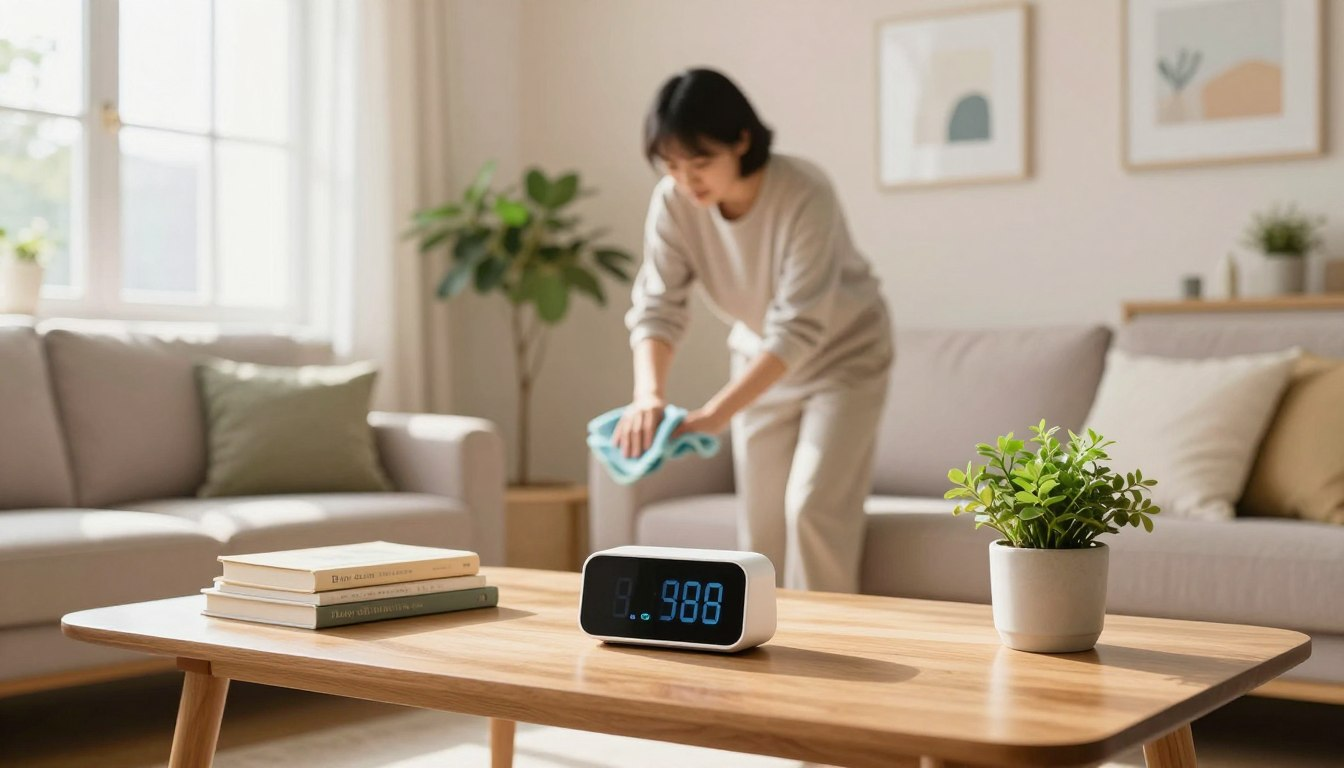
Marie Kondo’s work reminds us that tidying isn’t about chasing perfection—it’s about creating a home that feels good to live in. The problem is that most people try to get that feeling by doing marathon cleaning sessions… and then feel frustrated when the mess comes right back.
The easier way is a daily reset: one timer, 20 minutes, and a short list of “high-impact” tasks that make your home look (and feel) put together. It’s not deep cleaning. It’s not reorganizing your entire closet. It’s simply returning your space to “ready for tomorrow.”
When you commit to this daily reset routine for a clean home, you stop waking up to yesterday’s chaos. You protect your mornings, your energy, and your mood—without giving up your evenings to chores.
What you need: one timer (phone, kitchen timer, smart speaker), one “reset basket” (laundry basket or tote), and a small cleaning caddy you can grab in seconds.
Key takeaways:
- One 20-minute timer prevents “I’ll do it later” clutter from multiplying.
- Resetting focuses on surfaces, floors, and returns—what your eyes notice first.
- Consistency beats intensity: small daily wins keep weekends free.
- You can adapt the same routine for families, small spaces, and pet owners.
Why a 20-Minute Daily Reset Changes Everything
A 20-minute daily reset is the sweet spot: long enough to make visible progress, short enough that you’ll actually do it. Instead of letting clutter “set,” you clear the small messes while they’re still small—before they turn into a Saturday project.
This routine works because it focuses on the few actions that instantly lift a room: clearing surfaces, returning loose items to their homes, doing a fast kitchen close, and making sure tomorrow starts easy. You’re not trying to scrub grout—you’re trying to restore order.
What a daily reset is (and isn’t):
- It is: a fast tidy + light wipe-downs + “closing tasks” that keep your home functional.
- It isn’t: deep cleaning, decluttering entire categories, or reorganizing drawers.
- It’s for: maintaining the baseline so your home stays consistently livable.
To get the most from your reset, use a simple plan you can repeat. If you like checklists, keep a small cleaning plan nearby and stick to the same “route” through the house each day.
| Area | Reset task | Target time |
|---|---|---|
| Kitchen | Clear counters + reset sink | 5 minutes |
| Living space | Return items + quick surface tidy | 5 minutes |
| Bathroom | Fast wipe + restock essentials | 5 minutes |
| Bedroom/entry | Clothes away + tomorrow prep | 5 minutes |
That’s it. Four zones. One timer. A calmer home—every day.
The Psychology Behind Daily Reset Routines

Daily reset routines aren’t magic—they’re psychology in action. They lower the “activation energy” of cleaning by making it small, timed, and predictable. When the job feels contained, you’re less likely to procrastinate or spiral into perfectionism.
Breaking the All-or-Nothing Mindset
If you’ve ever thought, “If I can’t do it all, I won’t do any of it,” you’re not alone. The all-or-nothing mindset turns cleaning into a huge emotional task. A reset routine replaces that with a simple rule: do what you can before the timer ends. The win is showing up, not finishing every possible chore.
How Small Actions Create Big Results
Resets work because they “close loops.” A loop is anything left half-finished: mail on the counter, shoes in the hallway, cups in the bedroom, a bag that never got unpacked. Closing loops doesn’t take hours—but it makes your home look instantly calmer because the visual clutter disappears.
| Small action | Frequency | What it prevents |
|---|---|---|
| Reset the sink + counters | Daily | Kitchen “pile-up” and sticky surfaces |
| Return items to home | Daily | Clutter migrating room-to-room |
| Quick bathroom wipe | Daily | Hard-to-clean buildup later |
The goal isn’t a showroom. It’s a home that resets quickly—so you can live in it.
Setting Up Your Timer-Based System
Your timer is the secret weapon. It turns cleaning into a short sprint instead of an endless chore. You don’t negotiate with it. You start it, move with purpose, and stop when it ends—no guilt, no “just one more thing” unless you truly want to.
Before you begin, make the routine easy to start. Keep your reset basket and cleaning caddy in a consistent place (laundry room, under the kitchen sink, or a hallway closet). If you have to hunt for supplies, the routine won’t stick.
Choosing the Right Timer Method
Pick the option you’ll actually use every day:
- Phone timer: fastest, always nearby, great for reminders.
- Kitchen timer: simple and distraction-free (no notifications).
- Smart speaker: hands-free if you’re carrying laundry or cleaning supplies.
Best Times of Day for Your Reset Routine
There’s no universal “perfect” time—only what fits your life. Most people stick with one of these:
- After dinner: a classic “closing shift” that prevents waking up to a messy kitchen.
- Right after kids’ bedtime: fast reset so evenings feel calmer.
- Morning reset: helpful if evenings are chaotic, but keep it light so you don’t start the day already tired.
If clutter is a major issue, pairing the reset with a simple decluttering rule (like one in, one out) keeps the baseline easier to maintain.
Daily Reset Routine for a Clean Home: The Complete 20-Minute Breakdown

This is the routine. Start the timer for 20 minutes and follow the same order every day. You’ll move faster because your brain knows what comes next.
Pro tip: carry a basket as you go. Anything that belongs in another room goes in the basket. When the timer ends, take the basket with you and do a quick “drop-off” on your way to bed.
Minutes 1–5: Quick Kitchen Reset
The kitchen is the highest-impact room because it’s where clutter and grime show up fast. Focus on the “triangle”: counters, sink, and the floor right in front of it.
- Load the dishwasher or stack dishes neatly (don’t start a deep scrub).
- Clear counters: toss trash, put food away, return items to their homes.
- Wipe the counters and sink (a quick swipe is enough for a reset).
- Do a fast spot-sweep if crumbs are visible.
If your kitchen is a “hot zone,” consider keeping a tiny checklist nearby (or using your kitchen cleaning schedule printable) so you don’t overthink it.
Minutes 6–10: Living Spaces Sweep
Now hit the rooms you see the most: living room, dining area, entryway. You’re aiming for clear surfaces and clear floors.
- Pick up and put away anything out of place (use the basket for “another room” items).
- Fold throws, fluff pillows, straighten rugs.
- Do a fast “floor scan”: grab obvious clutter so walking paths feel open.
- Quickly handle laundry that’s drifting into the living space (even a simple “all laundry to the hamper” helps). If laundry is a constant stressor, keep your routine simple with a plan like this laundry routine for busy people.
Don’t dust every shelf. Don’t organize the bookshelf. Reset the room to “company could drop by.” That’s the standard.
Minutes 11–15: Bathroom and Bedroom Touch-Ups
This is the “hygiene and peace” block. A few small actions here make your home feel dramatically cleaner.
- Bathroom: quick wipe of sink + faucet, spot-clean the mirror, wipe the toilet seat/handle if needed, hang towels neatly, restock toilet paper and soap.
- Bedroom: put clothes in hamper or closet, clear nightstand clutter, straighten bedding (even a 30-second bed smooth helps).
If you prefer a structured approach, keep a short bathroom cleaning checklist handy so you stay focused on the quick wins.
Minutes 16–20: Final Touches and Tomorrow Prep
The last minutes are what make tomorrow easier. This is where the routine stops being “cleaning” and becomes “life support.”
- Empty trash if it’s full or smelly; take recycling to the bin if it’s overflowing.
- Do a quick mail/paper sweep: recycle junk, put important papers in one labeled spot (no filing project tonight).
- Set out tomorrow essentials: keys, bag, water bottle, lunch container, gym clothes.
- Carry your reset basket and do a fast “drop-off” to return items where they belong.
When the timer ends, you’re done. The routine’s power comes from stopping on time and doing it again tomorrow.
Room-by-Room Reset Essentials

Different homes have different “mess personalities.” Some kitchens explode. Some entryways collect everything. Some bathrooms look messy even when they’re clean. Use the same 20-minute framework, but prioritize the rooms that bother you most.
Kitchen Priorities That Make the Biggest Impact
When in doubt, reset the sink and counters. A clear counter instantly makes the whole kitchen feel cleaner. Focus on high-touch points, too—handles, switches, and the spot where you prep food.
- Clear and wipe the main counter you use most.
- Reset the sink (empty it, quick rinse, quick wipe).
- Do a fast “food sweep”: put perishables away so nothing spoils overnight.
- Spot-sweep crumbs where you stand.
Living Room Speed Cleaning Strategies
The living room typically needs two things: returns and surfaces. If the floor is clear and the main surfaces are mostly empty, the room looks reset—even if there are toys behind the couch.
- Do a “walkway first” approach: clear paths and high-visibility zones.
- Use baskets (with lids if possible) for quick containment—then deal with it later.
- If pet hair is your daily battle, keep a lint roller or handheld vacuum accessible for a 30-second pass.
Bedroom and Bathroom Quick Wins
Bedrooms get messy from “temporary” piles. Bathrooms get messy from clutter around the sink. Your reset should interrupt both patterns.
- Bedroom: one rule—clothes don’t live on chairs. If you’re not putting it away, put it in the hamper.
- Bathroom: clear the sink area (even if you place items in one small tray), wipe the faucet, and replace the hand towel if it’s damp.
If your fridge is part of your daily stress (and it often is), a quick weekly check paired with a simple system like this fridge organization checklist makes daily resets faster.
Tools and Supplies to Keep Your Routine Efficient

Your routine is only as fast as your setup. If you want an efficient reset, make sure you’re not running back and forth for supplies. The goal is to move through your home once, with everything you need in hand.
Essential Cleaning Caddies for Each Area
One caddy is enough for most homes, but if you have multiple floors, consider a small set of essentials upstairs and downstairs. Keep it simple:
- All-purpose cleaner (or surface-safe spray for your counters)
- Microfiber cloths (a few clean ones ready to go)
- Disinfecting wipes (optional, great for quick touch-ups)
- Small brush or sponge for the sink
- Trash bag roll (optional, but surprisingly helpful)
Quick safety note: always use cleaning products as directed on the label, ventilate when needed, and store supplies out of reach of kids and pets.
Time-Saving Products Worth Having
You don’t need fancy gadgets, but a few basics make the routine smoother:
- A reset basket: a laundry basket or tote for room-to-room returns.
- Storage “landing zones”: a tray by the door, a bin for mail, a basket for toys.
- Fast floor tool: a broom, a lightweight vacuum, or a reusable dust mop—whatever you’ll grab quickly.
- Microfiber: it’s faster than paper towels and works on most surfaces.
Building the Habit: Making Your Reset Routine Stick
The best routine is the one you repeat. If you want this reset to become automatic, treat it like brushing your teeth: non-negotiable, short, and tied to an existing moment in your day.
Anchoring Your Routine to Existing Habits
Pick a trigger you already do every day. Examples:
- Start the reset right after dinner plates are in the sink.
- Start it right after kids’ bedtime routine.
- Start it immediately after you change into “home clothes.”
When the trigger happens, you start the timer—no debate.
Tracking Your Progress Without Overwhelm
Keep tracking simple. You don’t need a new system—just a small visual win. A calendar checkmark works. A quick note in your planner works. Or use a simple printable habit tracker if you love seeing streaks (this habit tracker printable can pair well with the reset).
| Tracking method | Why it works | Daily time |
|---|---|---|
| Calendar checkmark | Fast, visual, satisfying | 10 seconds |
| Planner note | Builds reflection into the habit | 30–60 seconds |
| Printable habit tracker | Makes streaks obvious | 20–30 seconds |
Dealing with Missed Days
Missing a day happens. Don’t “make up” for it with a 90-minute punishment clean. Just restart the next day. If you missed because life was chaotic, use the routine as support: set the timer and do only what you can. A partial reset still protects tomorrow.
Customizing Your Reset for Your Lifestyle
Your home, your rules. The framework stays the same, but the focus shifts based on your season of life. The goal is a routine that feels realistic—because realistic is repeatable.
Adaptations for Families with Kids
For families, the reset works best when it’s shared. Keep tasks simple and visible:
- Give each child one job that takes under 3 minutes (shoes, toys, books, backpacks).
- Use a “toy sweep” basket: everything goes in fast, sorting can happen later.
- Make it a timer game: “Let’s see how much we can reset before it ends.”
Modifications for Small Spaces
Small spaces look messy faster—so your reset should prioritize surfaces and floors even more. Two rules help:
- One-touch returns: when you pick something up, put it where it lives (not on another surface).
- Containment zones: baskets, trays, and small bins keep items from spreading.
Adjustments for Pet Owners
If you have pets, add one pet-focused micro-task inside your 20 minutes:
- Quick sweep/vacuum of the main pet-hair zone.
- Refresh the water bowl area and wipe drips.
- Return pet toys to one bin so they’re not everywhere.
Common Obstacles and How to Overcome Them
Most resets fail for one of three reasons: the routine is too complicated, supplies aren’t ready, or expectations are unrealistic. Here’s how to fix the common sticking points without turning this into a whole new project.
When 20 Minutes Feels Impossible
If your days are packed, treat the reset like a “minimum effective dose.” You’re allowed to do a lighter version. The key is keeping the habit alive.
- Start the timer anyway and do only one zone (kitchen first is usually best).
- Make it a “closing loop” reset: returns + trash + counters only.
- Use micro-moments: a 2-minute counter wipe right after dinner counts as progress.
Managing Clutter That Keeps Coming Back
If clutter constantly returns, it’s usually a sign that items don’t have clear homes—or the homes aren’t where you actually use the items. The fix is not more cleaning; it’s better placement.
- Pick the top three “clutter hotspots” (entryway, kitchen counter, living room table).
- Create one container for each hotspot (tray, basket, bin).
- During the reset, everything goes into that container or to its real home—no in-between piles.
Getting Family Members On Board
People resist routines that feel like punishment. Make the reset feel like a shared benefit: “We reset so our mornings are easier.” Keep tasks fair, small, and specific.
- Assign each person one “home base” area (shoes, backpacks, toys, trash).
- Use the timer as the end point—no endless nagging.
- Praise completion, not perfection. A 90% reset is still a reset.
Quick 20-Minute Reset Checklist (Copy + Save)
If you want the fastest “no-thinking” version, follow this exact checklist every day until it becomes automatic.
- Kitchen (5 min): dishes contained, counters cleared, sink wiped, crumbs swept.
- Living areas (5 min): floors cleared, surfaces reset, pillows/throws straightened, items returned or placed in reset basket.
- Bathroom + bedroom (5 min): sink/faucet wiped, towels hung, quick mirror swipe, clothes to hamper/closet, nightstand cleared.
- Tomorrow prep (5 min): trash/recycling handled, keys/bag/lunch staged, basket drop-off, lights off.
Conclusion
A clean home doesn’t require endless cleaning—it requires a reliable reset. When you use one 20-minute timer each day, you protect your space from “slow chaos” and give yourself the gift of calmer mornings.
Start tonight. Keep it simple. Let the timer do the boundary-setting. In a week, you’ll notice something powerful: your home will feel easier to live in, because you’re no longer carrying yesterday into tomorrow.
About the author
Habertor Editorial Team
We write practical home routines and simple organization guides designed for real life—busy schedules, lived-in spaces, and systems you can actually maintain. Last updated: March 2, 2026.
FAQ
What exactly is a daily reset routine for a clean home, and why does it work?
A daily reset is a short, timed tidy that returns your home to a baseline—clear surfaces, contained dishes, items back in place. It works because it prevents buildup. Instead of cleaning messes after they become overwhelming, you stop them while they’re still small.
How can I overcome an “all-or-nothing” mindset when it comes to cleaning?
Use the timer as your permission slip. You’re not “cleaning the whole house.” You’re doing a 20-minute reset. Small, consistent actions beat occasional big cleanups—especially when your goal is a home that stays livable most days.
What should be included in a daily cleaning checklist for someone with a busy schedule?
Keep it high-impact: dishes contained, counters wiped, floor clutter cleared, bathroom sink quick wipe, and clothes into hamper/closet. Focus on the areas you see and use the most (kitchen, living space, entryway, bathroom sink zone).
What are the best tools to keep an efficient home cleaning routine under 20 minutes?
Use a grab-and-go setup: an all-purpose cleaner (surface-safe for your home), microfiber cloths, a quick floor tool (broom or lightweight vacuum), disinfecting wipes for touch-ups, and a reset basket for returns. The biggest “tool” is having everything stored where you can grab it fast.
How can I implement household organization strategies if I have kids or pets?
Use simple containment: baskets for toys, a bin for backpacks, a tray for keys, and one spot for pet items. Assign small, age-appropriate tasks and use the timer as a fun finish line. The reset works best when everyone owns one small part of it.
What happens if I miss a day of my tidy home routine?
Nothing breaks—you just restart. Don’t punish yourself with extra-long cleaning. Set the timer the next day and do the routine as written. If you missed because evenings are unpredictable, move your reset to a more reliable anchor (after dinner, after bedtime, or right after you change into home clothes).
How do I manage paper clutter and mail during my daily reset?
Keep it to two minutes: recycle junk immediately, place action items in one tray, and put “file later” papers in one folder (not a counter pile). Your reset should contain paper, not turn into a full filing session.