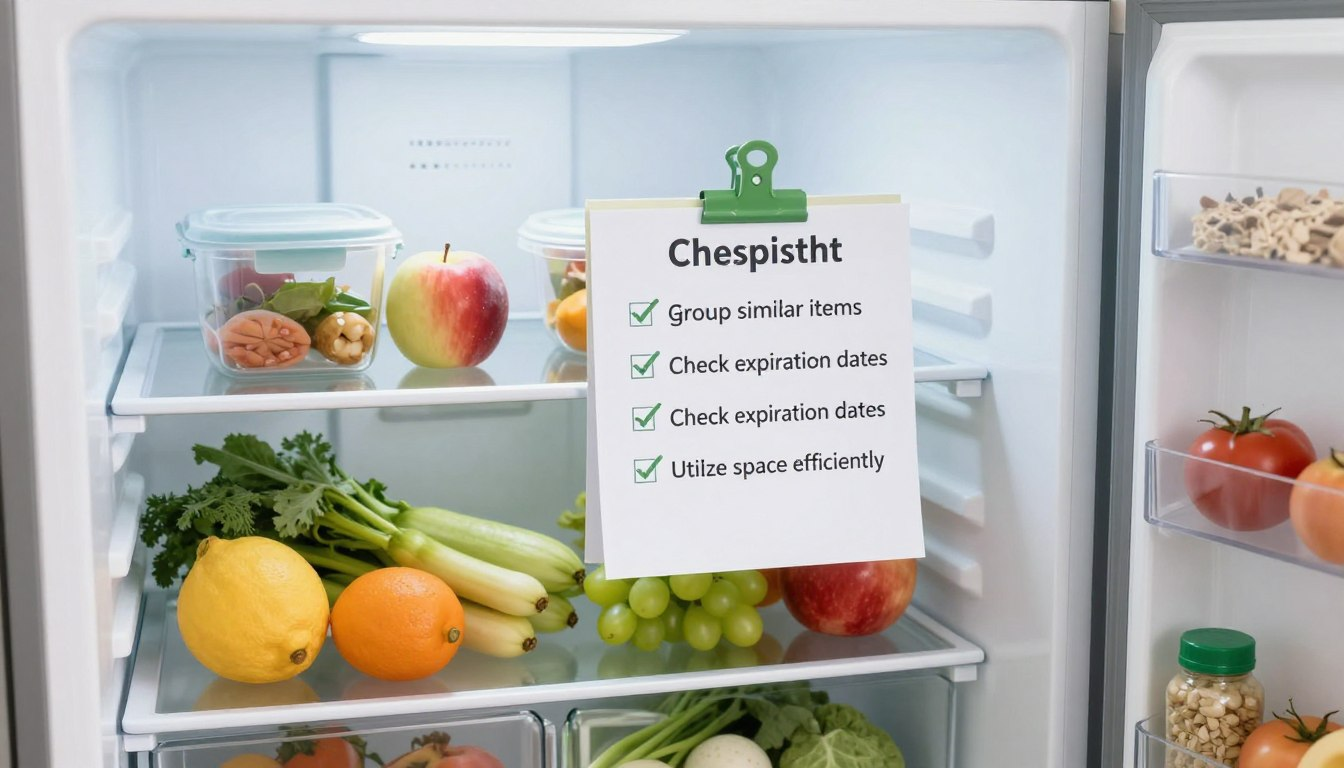
Did you know the average American household throws away nearly $1,600 worth of food each year? This waste often happens because things get lost in a crowded fridge. A clean fridge is key to saving money and being green.
Keeping your fridge tidy is not just nice to look at. It helps everyone know what food is left and what needs to be eaten fast. These organized fridge tips save time and cut down on bad food.
Creating a smart fridge layout can save a lot of money. A fridge organization checklist keeps food in sight and easy to grab. This simple step changes how we plan meals and shop.
Key Takeaways
- Dramatically lowers the annual cost of discarded groceries.
- Increases the visibility of all fresh and perishable ingredients.
- Makes daily meal preparation and cooking much faster.
- Maximizes the utility of limited kitchen and storage space.
- Supports a greener and more sustainable lifestyle for the family.
- Prevents accidental overbuying of items already in the home.
1. Why Small Fridge Organization Matters for Reducing Food Waste
Organizing a small fridge is very important. It helps reduce food waste. A tidy fridge means everything gets eaten before it goes bad.
Food waste is a big problem in American homes. Knowing how fridge organization helps is key. The USDA says families waste about 40% of their food, costing money and harming the environment.
1.1 The Cost of Food Waste in American Households
Food waste costs American families a lot. The average family of four wastes about $1,500 in food each year, says the Natural Resources Defense Council. This hurts budgets and harms the planet by wasting water, energy, and land.
1.2 How Poor Organization Contributes to Spoilage
A messy fridge leads to spoiled food. Clutter makes it hard to find what you need. Using fridge organization hacks helps avoid this.
A study found, “If you can’t see what you have, you’ll buy more and waste food.” This shows how important it is to keep things visible and easy to reach.
1.3 Unique Challenges of Organizing Small Refrigerators
Small fridges are harder to organize. You need to use every inch wisely. Learning how to organize a refrigerator is essential for small spaces.
1.4 Benefits of an Organized Small Fridge
An organized small fridge has many benefits. It reduces waste, keeps food safe, and makes life easier. By organizing well, families can save money, help the planet, and make shopping and planning meals simpler.
“A tidy fridge is a big help for those wanting to waste less and save more,” says a household expert. Focusing on fridge organization can greatly improve your life and the environment.
2. Preparing Your Small Fridge for Optimal Organization

Before you start organizing, make sure your fridge is ready. Clean it, get rid of clutter, and prepare it for organization.
2.1 Deep Cleaning Your Refrigerator
Deep cleaning is the first step. It’s more than just wiping down surfaces. You need to clean every corner.
2.1.1 Removing All Items and Shelves
First, take out everything from your fridge. This includes food, drinks, shelves, and drawers. Removing everything lets you see what to keep, throw away, or donate.
2.1.2 Cleaning Solutions That Work Best
Use baking soda and water or a mild detergent solution for cleaning. Avoid harsh chemicals that can be harmful.
| Cleaning Solution | Effectiveness | Safety |
|---|---|---|
| Baking Soda and Water | High | Very Safe |
| Mild Detergent Solution | High | Safe |
| Harsh Chemicals | Very High | Not Safe |
2.2 Checking Expiration Dates and Discarding Spoiled Items
After everything is out, check food expiration dates. Throw away any spoiled or expired food. This prevents health risks and makes room for new items.
2.3 Taking Inventory of What You Actually Have
Make a list of what you’re keeping. This helps plan meals, avoid buying too much, and use what you already have.
2.4 Measuring Your Fridge Space
Measure your fridge’s inside, including shelves and compartments. This helps pick the right storage and use space well.
3. Understanding Refrigerator Temperature Zones
Knowing the temperature zones in your fridge is important. Each part of your fridge has its own temperature. This helps you store food right, keeping it fresh longer.
3.1 Upper Shelves: The Warmer Zone
The top shelves are warmer. They’re good for foods that don’t need to be very cold.
3.1.1 What to Store on Top Shelves
Store ready-to-eat foods like leftovers and drinks here. These items are eaten fast and don’t need cold temperatures.
3.1.2 What Never to Store in Warm Zones
Don’t put raw meat, fish, and poultry in warm zones. FoodSafety.gov says to keep them in a sealed container at the fridge’s bottom. This stops juices from leaking onto other foods.
“The way we store food in our fridges can significantly impact its freshness and safety. Proper storage is key to preventing foodborne illnesses.”
— FoodSafety.gov
3.2 Lower Shelves: The Coldest Zone
The bottom shelves are the coldest. They’re perfect for raw ingredients and meat.
3.2.1 Raw Ingredients and Meat Storage
Raw meat, poultry, and fish go in covered containers on the bottom shelf. This stops cross-contamination.
3.2.2 Preventing Cross-Contamination
Keep raw products away from ready-to-eat foods. Use sealed containers or zip-top bags to do this.
| Storage Location | Suitable Foods | Temperature Considerations |
|---|---|---|
| Upper Shelves | Ready-to-eat foods, leftovers, drinks | Warmer zone, not suitable for raw meat |
| Lower Shelves | Raw meat, poultry, fish | Coldest zone, prevents cross-contamination |
3.3 Door Storage: The Warmest Area
The door storage is the warmest part. It’s good for condiments and items that don’t need cold temperatures.
3.4 Crisper Drawers: Humidity-Controlled Zones
Crisper drawers keep high humidity. They’re great for leafy greens and other vegetables.
3.4.1 High Humidity Settings for Leafy Greens
Leafy greens like lettuce and spinach need high humidity. High humidity in crisper drawers keeps them fresh.
3.4.2 Low Humidity Settings for Fruits
Fruits prefer lower humidity. Low humidity in crisper drawers stops moisture from spoiling fruits.
Using fridge temperature zones helps keep food fresh. It also reduces waste with efficient fridge storage solutions.
4. Complete Fridge Organization Checklist

To keep your fridge tidy, you need a plan. A fridge organization checklist helps. It makes sure everything has its place. This makes finding food easier and helps avoid expired or spoiled items.
4.1 Top Shelf Organization Tasks
The top shelf is warm. It’s best for foods you can eat right away and leftovers.
4.1.1 Arranging Leftovers for Easy Visibility
Put leftovers in clear containers. Label them with dates. This helps you know when to eat them.
4.1.2 Positioning Ready-to-Eat Foods
Put foods like cooked meats and salads at the front. This makes them easy to find.
4.2 Middle Shelf Organization Tasks
The middle shelf is for dairy and other cold items.
4.2.1 Dairy Product Placement
Keep milk, yogurt, and cheese here. They should be away from strong smells.
4.2.2 Organizing Eggs and Butter
Eggs go in their carton on the middle shelf. Butter goes in a special dish.
4.3 Bottom Shelf Organization Tasks
The bottom shelf is the coldest. It’s great for raw meat, poultry, and seafood.
4.3.1 Raw Meat and Seafood Storage
Raw meat and seafood need covered containers. This stops cross-contamination.
4.3.2 Using Drip Trays
Use drip trays under raw meat. They catch juices and keep the fridge clean.
4.4 Crisper Drawer Organization Tasks
Crisper drawers keep produce fresh. They’re perfect for fruits and veggies.
Store fresh produce here. Adjust the humidity for different types.
4.5 Door Storage Organization Tasks
The door is warm. It’s good for condiments and juices.
Organize door storage. Use racks or baskets to save space.
4.6 Freezer Coordination with Fridge Organization
Your freezer should match your fridge. Store frozen foods in airtight containers. Label them.
Here’s a summary of the fridge organization checklist in a tabular format:
| Area | Recommended Storage | Tips |
|---|---|---|
| Top Shelf | Leftovers, Ready-to-Eat Foods | Use clear containers, label with dates |
| Middle Shelf | Dairy Products, Eggs, Butter | Keep away from strong-smelling foods |
| Bottom Shelf | Raw Meat, Poultry, Seafood | Use covered containers or zip-top bags |
| Crisper Drawers | Fruits, Vegetables | Adjust humidity settings according to type |
| Door Storage | Condiments, Juices | Use door racks or baskets |
| Freezer | Frozen Foods | Use airtight containers or freezer bags, label with contents and dates |
5. Smart Storage Solutions for Small Fridges

Smart storage solutions can make a small fridge tidy. Using the right tools and techniques, you can use your fridge better. This keeps your food fresh longer.
5.1 Stackable Clear Containers and Bins
Stackable clear containers and bins are key for a neat fridge. They let you see what’s inside. This makes it easy to find what you need and avoid bad food.
5.1.1 OXO Good Grips Refrigerator Bins
OXO Good Grips Refrigerator Bins are great for organizing. They fit many fridge types. Their clear design and easy handles make them simple to use.
5.1.2 Rubbermaid Brilliance Food Storage Containers
Rubbermaid Brilliance Food Storage Containers are strong and leak-free. They’re clear and come in different sizes. This makes them perfect for saving space.
5.2 Lazy Susans for Corner and Back Access
Lazy Susans help you reach items in the back or corners. They spin, so you don’t miss anything.
5.2.1 Copco Non-Skid Turntable
The Copco Non-Skid Turntable is a smart lazy Susan. It keeps things from falling off. Its non-skid surface makes it easy to manage your fridge.
5.3 Shelf Risers to Maximize Vertical Space
Shelf risers add more room in small fridges. They lift shelves to make more space for storing things.
5.3.1 SimpleHouseware Stackable Cabinet Shelf
The SimpleHouseware Stackable Cabinet Shelf is adjustable. It helps you use more space in your fridge.
5.4 Drawer Dividers and Organizers
Drawer dividers and organizers keep the crisper drawers tidy. They separate food and other items. This stops clutter and makes finding things easier.
5.5 Magnetic Strips and Hooks
Magnetic strips and hooks offer extra storage for small items. They can hold spice jars, labels, or notes. They’re great for keeping things handy.
Let’s look at how these solutions work:
| Storage Solution | Benefits | Examples |
|---|---|---|
| Stackable Containers | Maximizes space, easy to clean | OXO Good Grips, Rubbermaid Brilliance |
| Lazy Susans | Improves accessibility, reduces clutter | Copco Non-Skid Turntable |
| Shelf Risers | Increases vertical storage, adaptable | SimpleHouseware Stackable Cabinet Shelf |
6. Food Storage Best Practices to Minimize Waste
Smart food storage is key to less waste. Good strategies can cut down on waste. This saves money and helps the planet.
6.1 First In, First Out (FIFO) Method
The FIFO method is simple and works well. It makes sure older items get eaten first. It’s used in stores and homes.
6.1.1 Rotating Stock Like Grocery Stores
Grocery stores sell older items first. You can do the same at home. Put newer items behind older ones.
6.1.2 Creating a Use-It-First Zone
Make a special zone for older items. This makes it easy to find and use them before they spoil.
6.2 Proper Food Wrapping and Container Selection
Right wrapping and containers keep food fresh. The right materials stop moisture and air. They also keep flavors and smells from mixing.
6.2.1 Glass vs. Plastic Containers
Choosing between glass and plastic matters. Glass is better for leftovers because it doesn’t hold smells or tastes. Plastic is lighter but not as good.
6.2.2 Airtight Sealing Techniques
Sealing containers tightly keeps food fresh. Use lids or plastic wrap to keep air out. Vacuum sealing works too.
6.3 Labeling and Dating Your Food
Labeling and dating containers helps. It keeps track of what’s in the fridge. This way, older items get eaten first.
6.4 Strategic Placement for Maximum Visibility
Where you put food matters. Put often-used items where you can see them. Less used items go to the back or bottom.
6.5 Ethylene Gas Management
Ethylene gas makes fruits and veggies ripen. Storing them separately keeps them fresh longer. This helps keep produce fresh.
Using these tips can help you waste less food. You’ll have a tidy fridge and help the planet.
7. Daily and Weekly Maintenance Habits

Keeping your fridge tidy is key. Simple daily and weekly habits help a lot. They keep your fridge organized and working well.
7.1 Daily Quick Checks and Adjustments
Do quick checks every day. This keeps your fridge neat. It also makes sure you eat older food before it goes bad.
7.2 Weekly Fridge Audit Routine
Do a big check every week. It’s more detailed than daily checks. This keeps your fridge clean and organized.
7.3 Monthly Deep Organization Review
Do a deep clean once a month. Check expiration dates and clean shelves. This keeps your fridge in top shape.
7.4 Seasonal Adjustments for Small Fridges
Change your fridge setup with the seasons. This matches your eating habits and what’s in season. It saves space and cuts down on waste.
8. Common Fridge Organization Mistakes to Avoid

To keep your fridge organized and food fresh, avoid common mistakes. Many people make errors that waste food and reduce fridge efficiency. Knowing these mistakes helps you keep your fridge in order.
Overcrowding and Blocking Air Circulation
Overcrowding the fridge blocks air and causes uneven cooling. This can spoil food. Make sure there’s space for air to move. Proper air circulation is key to maintaining consistent refrigerator temperatures.
Storing Foods in Wrong Temperature Zones
Different foods need different temperatures to stay fresh. Storing them wrong can spoil them fast. Raw meat and fish go in the coldest part. Less perishable items like condiments go in the door. Knowing your fridge’s temperature zones is key.
Using Opaque Containers That Hide Food
Opaque containers hide what’s inside, leading to forgotten food. Clear containers let you see what’s inside. This helps you manage your fridge better and cut down on waste.
Neglecting the Back of the Fridge
The back of the fridge often gets ignored, leading to expired food. Clean it regularly to avoid this. Make checking the back a part of your cleaning routine.
Ignoring the Door Weight Limit
Fridge doors have weight limits. Overloading them can damage hinges or seals. Be careful of the weight limit and spread it out. This keeps your fridge in good shape.
Failing to Account for Expansion Space
When organizing, leave space for more items. This prevents overcrowding. Plan ahead to avoid reorganizing later.
9. Conclusion
Keeping your fridge organized is a big job. It needs hard work and dedication. Follow the tips in this article to make your kitchen better.
An organized fridge helps you save food, time, and money. Use methods like First In, First Out and proper wrapping. This keeps your fridge neat and useful.
It’s important to keep your fridge clean often. Set times for cleaning and organizing. This way, your kitchen stays tidy and helps the planet.
Begin organizing your fridge today. You’ll see how good it feels to have a clean kitchen. With some effort, you’ll make your cooking space better and greener.
FAQ
How can someone effectively use a fridge organization checklist to start their journey?
To start, remove expired items like old Heinz ketchup or French’s mustard. Then, sort items by temperature. This way, you can keep Horizon Organic milk and Vital Farms eggs easy to find.
What are the most efficient fridge storage solutions for limited spaces?
Use vertical space in small GE or Samsung fridges. OXO Good Grips bins or YouCopia shelf risers can double your space. This keeps small items from getting lost.
Why are temperature zones a critical part of best fridge organization practices?
Not all fridge areas are the same. Upper shelves are best for Chobani yogurt and leftovers. The bottom shelf is coldest, great for raw proteins like Perdue chicken.
What refrigerator organization hacks help in reducing weekly food waste?
Use a “Eat Me First” bin for items near expiration. This includes Philadelphia cream cheese or Organic Girl spinach. It helps use items before they spoil.
How does maintaining a tidy refrigerator impact grocery shopping habits?
Keeping your fridge tidy helps you see what you have. Use Pyrex containers to see how much Land O’Lakes butter or Tropicana orange juice you have. This stops you from buying too much at Whole Foods or Kroger.
What are the top organized fridge tips for managing crisper drawers?
Keep fruits and veggies separate in the crisper drawers. Use BlueApple or Rubbermaid FreshWorks containers to keep them fresh. This keeps your produce crisp and fresh.
Can shelf risers and lazy Susans really help in how to organize a refrigerator?
Yes, they can. A Lazy Susan helps in corner storage. Shelf risers create extra space for flat items like Applegate meats.