


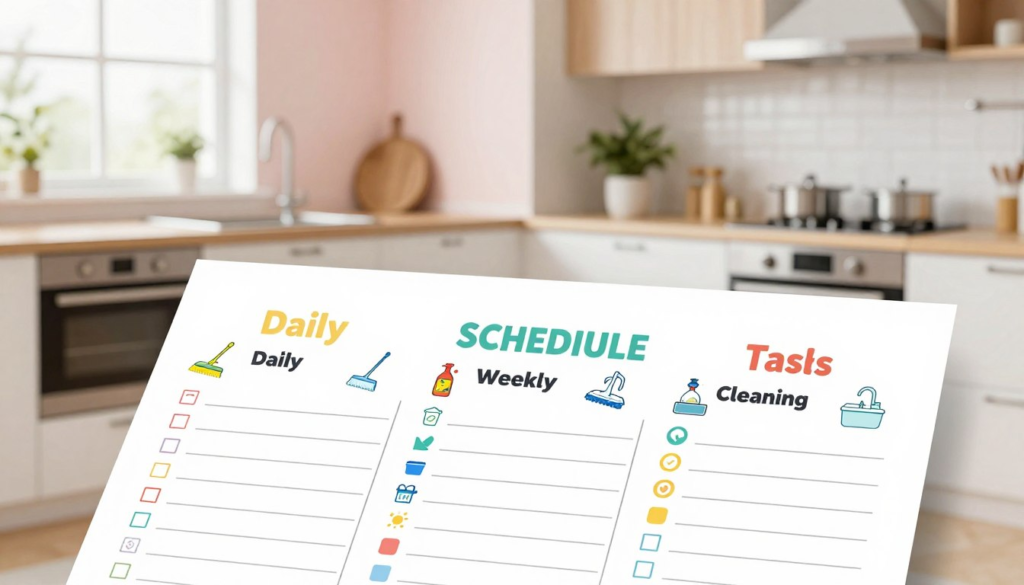
This kitchen cleaning schedule printable breaks everything into daily, weekly, and monthly tasks so your counters stay sanitary, your sink stops smelling, and grease doesn’t quietly build up on cabinets and appliances. The goal isn’t perfection—it’s a kitchen that’s ready when you are.
Quick note on safety: Clean first, then disinfect when needed (especially after raw meat or messy spills), and always follow product label instructions and ventilate the space.
Key Takeaways:
- Daily resets prevent stuck-on mess and keep pests away.
- Weekly focus tasks handle grease, bacteria hotspots, and appliance upkeep.
- Monthly deep cleans stop odors, extend appliance life, and keep your kitchen “guest-ready.”
- The best schedule is the one you’ll actually follow—so everything here is designed to be realistic.
If You Only Have 15 Minutes Today, Do This
No guilt, no overthinking. If today is busy, this quick reset gives the biggest impact:
- Clear counters (put food away, return items to cabinets).
- Load the dishwasher (or wash the essentials by hand).
- Wipe counters + stove with warm soapy water or an all-purpose cleaner.
- Scrub and rinse the sink, then dry the faucet (this alone makes a kitchen look clean).
- Quick floor pass in the mess zone (usually sink → stove → table).
That’s it. Now your kitchen is functional again—and tomorrow’s cleaning is easier.
Why We Need a Structured Kitchen Cleaning Plan
Kitchens are high-contact spaces: hands touch handles, food splashes, and moisture hangs around sinks and sponges. Without a plan, we tend to clean what we can see—and ignore what quietly builds up (like greasy cabinet pulls, sticky appliance buttons, or crumbs under the toaster).
A Schedule Keeps Things Cleaner With Less Effort
A scheduled approach works because it prevents “marathon cleaning.” Instead of waiting until the oven is smoking or the fridge smells weird, you do small maintenance before the problem gets big. It also helps you clean in the correct order: remove grime first, then disinfect when necessary.
Printables Help You Stay Consistent
A printable schedule is a visual nudge. Tape it inside a cabinet door or on the fridge, and it becomes a simple checklist instead of a mental load. If multiple people use the kitchen, it also creates clarity: everyone knows what “reset the kitchen” actually means.
Understanding the Three-Tier Kitchen Cleaning System


Think of your kitchen like a gym: quick wipe-downs keep it usable, weekly maintenance keeps it running well, and monthly deep cleans prevent long-term damage. Here’s what each tier is for:
| Tier | Goal | Typical time | Examples |
|---|---|---|---|
| Daily | Reset the space | 10–20 minutes | Dishes, counters, sink, stove, quick floor sweep |
| Weekly | Stop grease + bacteria hotspots | 20–40 minutes | Mop, fridge handles, microwave, trash can, cabinet fronts |
| Monthly | Deep clean + prevent odors | 45–90 minutes | Oven, fridge shelves, dishwasher clean cycle, range hood filter |
You don’t need to do everything every day—you just need the right things at the right frequency.
Kitchen Cleaning Schedule Printable
Use this as your “print and post” section. If you want it extra practical, laminate it and check off tasks with a dry-erase marker.
Daily Checklist (10–20 minutes total)
- Wash dishes / load dishwasher and start it if full
- Wipe counters (including around small appliances)
- Wipe stovetop + knobs (quick pass prevents buildup)
- Scrub, rinse, and dry the sink + faucet
- Quick sweep/vacuum in high-traffic zones
- Trash check: take out if smelly, full, or has raw-food packaging
Weekly Checklist (pick a day, 20–40 minutes)
- Mop the floor (or steam mop if your flooring allows)
- Wipe cabinet fronts and handles (especially near the stove)
- Clean microwave inside and out
- Clean fridge door handles + the most-used shelf
- Disinfect high-touch points (faucet handles, light switches, appliance buttons) as needed
- Wash dish towels + replace/clean scrubbers (the fastest way to reduce kitchen funk)
Monthly Checklist (45–90 minutes, choose a weekend block)
- Pantry mini-audit: toss expired items and wipe shelves
Optional Seasonal/Quarterly Add-Ons
-
- Vacuum fridge coils if accessible (check your manual)
-
- Clean behind/under large appliances (fridge, stove)
-
- Wash windows and deep-clean blinds/curtains near the kitchen
-
- Check fire extinguisher and replace batteries in nearby alarms
Daily Kitchen Cleaning Checklist
Daily cleaning is about two things: food safety and momentum. When the kitchen gets a basic reset each day, it stops feeling like a room that “never stays clean.”
Morning Quick-Clean (2–5 minutes)
-
- Unload the dishwasher (even halfway helps)
-
- Wipe counters where you’ll prep food
-
- Rinse the sink and clear the drain area
Why this works: Starting with empty counters and an empty-ish sink makes it dramatically easier to clean as you go later.
Evening “Close the Kitchen” Reset (10–15 minutes)
This is the routine that keeps kitchens under control. Do it right after dinner (or right before bed if evenings are chaotic):
-
- Dishes: load dishwasher, soak pans, wipe the sink strainer area.
-
- Counters: clear clutter first, then wipe in one direction (crumbs last).
-
- Stove: warm soapy cloth pass on stovetop and knobs; spot-clean splatters before they bake on.
-
- Sink: quick scrub, rinse, dry the faucet and basin (drying = fewer water spots and less grime).
-
- Floor: sweep the “crumb triangle” (sink, stove, table) and spot-clean sticky areas.
Disinfect when it matters: If raw meat juices touched counters, cutting boards, or sink edges, wash with soap and water first, then disinfect following label directions and ventilation guidance.
Weekly Kitchen Cleaning Routine

Weekly tasks handle the “invisible” grime: grease mist, sticky handles, appliance buttons, and floors that look fine—until you mop them.
A Simple Weekly Layout (Pick Your Days)
If one big weekly clean feels annoying, split it across the week. Here’s a realistic example (swap days anytime):
| Day | Weekly focus (10–20 minutes) |
|---|---|
| Monday | Microwave + small appliances wipe-down |
| Tuesday | Cabinet fronts + handles (especially near stove) |
| Wednesday | Fridge handles + one shelf quick wipe |
| Thursday | Trash can wash or disinfect + recycling area tidy |
| Friday | Backsplash wipe + switch plates and knobs |
| Weekend | Mop floor + sink drain freshen |
This format keeps each session short while still preventing buildup.
Weekly “Non-Negotiables” (The Stuff That Changes Everything)
-
- Mop at least once (twice if kids/pets track in dirt).
-
- Wipe handles and buttons (fridge, microwave, oven, coffee maker).
-
- Swap dish towels and refresh sponges/scrubbers.
-
- Quick fridge check: toss leftovers past their prime and wipe drips.
Monthly Kitchen Deep Cleaning Schedule

Monthly deep cleaning is where you win the long game: fewer odors, fewer pests, fewer “what is that sticky stuff?” surprises.
Major Appliance Deep Cleaning
Oven Interior Complete Clean
If your oven has a self-clean function, follow the manufacturer’s instructions (and ventilate well). If you’re cleaning manually, use a product made for ovens or a baking soda paste for lighter mess. Either way, wipe up spills quickly going forward—burnt-on sugar and grease are the hardest to remove later.
Refrigerator Section Clean (Not Always the Whole Thing)
You don’t have to empty the entire fridge every month. Instead, rotate: one month do the top shelf and door bins, next month do drawers. Pull items, wipe with warm soapy water, dry thoroughly, and return food grouped by category so you can actually see what you have.
Dishwasher Deep Clean Cycle + Filter Check
Run a dishwasher cleaning cycle (with a cleaner or vinegar method that your manufacturer allows), and check the filter if your model has one. A clean dishwasher means cleaner dishes—and fewer mystery smells.
Range Hood Filter Degrease
This is the task that most kitchens ignore—and it makes a big difference. If your hood has a washable metal filter, degrease it in hot water with dish soap and a degreasing agent (or a baking soda boost). Let it dry fully before reinstalling. If it’s charcoal/disposable, replace as recommended.
Often-Neglected Areas That Make Kitchens Feel “Dirty”
-
- Trash can: wash the inside, wipe the lid, and disinfect the rim area.
-
- Cabinet edges: the underside of upper cabinets collects grease and dust.
-
- Backsplash grout: a soft brush + gentle cleaner keeps it from darkening.
-
- Baseboards and corners: crumbs travel—especially near the fridge and stove.
How to Create Your Kitchen Cleaning Schedule Printable

The schedule above works for most homes, but your printable should match your reality. A household that cooks twice a day needs a different rhythm than one that mostly reheats meals.
Step 1: Assess Your Kitchen’s Mess Patterns
Ask:
-
- Where do crumbs collect most (table, stove, snack drawer)?
-
- What smells first (trash, sink, fridge)?
-
- What gets greasy fastest (hood, cabinets, backsplash)?
These answers tell you what should be weekly instead of monthly.
Step 2: Keep the Daily List Short
If your daily list is 20 items long, you’ll stop using it. Daily should be “reset tasks” only: dishes, counters, sink, stovetop, quick floor. Everything else goes weekly or monthly.
Step 3: Choose a Format You’ll Actually Use
| Format | Best for | How to use it |
|---|---|---|
| Daily checklist | Consistency | Hang inside a cabinet door; check off nightly |
| Weekly grid | Short sessions | Assign one focus area per day |
| Monthly list | Deep clean tracking | Pick one weekend block; rotate fridge sections |
| Laminated sheet | Families/shared kitchens | Dry-erase checkoffs; easy accountability |
Essential Kitchen Cleaning Supplies and Organization
You don’t need a cabinet full of products. You need a small kit that’s always within reach. The more steps it takes to start cleaning, the less often it happens.
A Simple “Core Kit” That Covers 90% of Kitchen Cleaning
-
- Dish soap + a non-scratch sponge/scrubber
-
- All-purpose cleaner (or a gentle DIY option)
-
- Microfiber cloths (at least 6 so you can rotate clean ones)
-
- A soft brush (for grout and corners)
-
- Disinfectant you trust for high-risk messes (follow the label)
-
- Baking soda (odors, gentle scrubbing)
Food-contact surfaces: If you sanitize with a bleach solution, use an appropriate dilution and mix fresh solutions as directed by reliable guidance, then allow proper contact time and air-dry when appropriate.
Where to Store Supplies
Put the kit where you clean most. For many homes, that’s under the sink or in a small handled caddy. If you have kids or pets, store chemicals in a locked cabinet or on a high shelf.
Food-Safe Cleaning: The “Cutting Board Rule”
Cutting boards are one of the most important (and most overlooked) kitchen items. Wash boards after every use, and sanitize more often if you cut raw meat or if boards have deep grooves. Different materials need different care—wood boards should be dried thoroughly and maintained so they don’t crack, while many plastic boards can handle dishwasher sanitizing.
Important: Never mix cleaning chemicals (for example, bleach with vinegar or ammonia). If you disinfect, rinse the surface first, then apply only the disinfectant you’re using and follow instructions.
Practical Tips for Following Your Schedule (Even When Life Gets Busy)
Use a Timer and Stop When It Rings
One reason schedules fail is that “clean the kitchen” expands to fill the time you have. Set a 10-minute timer for the nightly reset. When it ends, stop. Consistency beats intensity.
Make One Person the “Closer,” Not the Only Cleaner
If you share a home, choose a closer each night—the person who does the final reset. Rotate the role. Everyone can help before that (putting food away, loading dishes, wiping counters), but one closer prevents the “I thought you were doing it” problem.
Keep the Sink Empty Overnight (When Possible)
This one habit makes mornings calmer. Even if you don’t finish every dish, at least load what you can and rinse the sink so it doesn’t greet you with yesterday’s mess.
Common Kitchen Cleaning Mistakes to Avoid
Skipping the Grease Zones
Cabinet pulls, the area above the stove, and the hood filter collect grease that attracts dust. If you ignore these, the kitchen can look “clean” but feel grimy.
Using Too Much Water on Wood and Cabinet Seams
Flooding wood cabinet edges or letting moisture sit can cause swelling and peeling over time. Use a damp cloth, not a soaking wet one, and dry after.
Disinfecting Without Cleaning First
Disinfectants work best on surfaces that are already free of visible dirt. Wipe grime away first, then disinfect when needed—and follow label instructions, including keeping surfaces wet for the required time.
Trying to Deep Clean Everything in One Day
If monthly deep cleaning feels impossible, make it rotational: oven this month, fridge shelves next month, pantry the month after. A schedule should reduce stress, not create it.
Conclusion
A clean kitchen isn’t about doing more—it’s about doing the right things at the right time. When daily resets are short and weekly/monthly tasks are planned, the kitchen stays comfortable, sanitary, and ready for real life.
Print the checklist, post it where you’ll see it, and start with the “close the kitchen” reset tonight. Small routines create big results.
FAQ
How long should daily kitchen cleaning take?
Most homes can keep a kitchen under control with 10–20 minutes a day: dishes, counters, sink, stovetop, and a quick sweep. If you cook heavily (fried foods, baking, lots of chopping), aim closer to 20 minutes.
What should I clean weekly that people usually forget?
Cabinet handles, appliance buttons, fridge door handles, trash can lids, and the microwave interior. These are high-touch or high-splatter areas that impact hygiene and odors fast.
How do I keep the schedule realistic for a busy family?
Shorten daily tasks to the essentials and rotate weekly focus areas. Use a timer and assign a nightly “closer.” Consistency matters more than doing every task perfectly.
Do I need to disinfect my kitchen every day?
Not necessarily. Daily cleaning with soap and water is often enough for routine mess. Disinfect when there’s higher risk (raw meat juices, illness in the home, or contaminated spills), and always follow label directions and ventilation guidance.
What’s the best way to keep cutting boards safe?
Wash after every use, sanitize more often when handling raw proteins, and replace boards that have deep grooves that won’t clean well. Wood boards also benefit from proper drying and occasional oiling to prevent cracks.