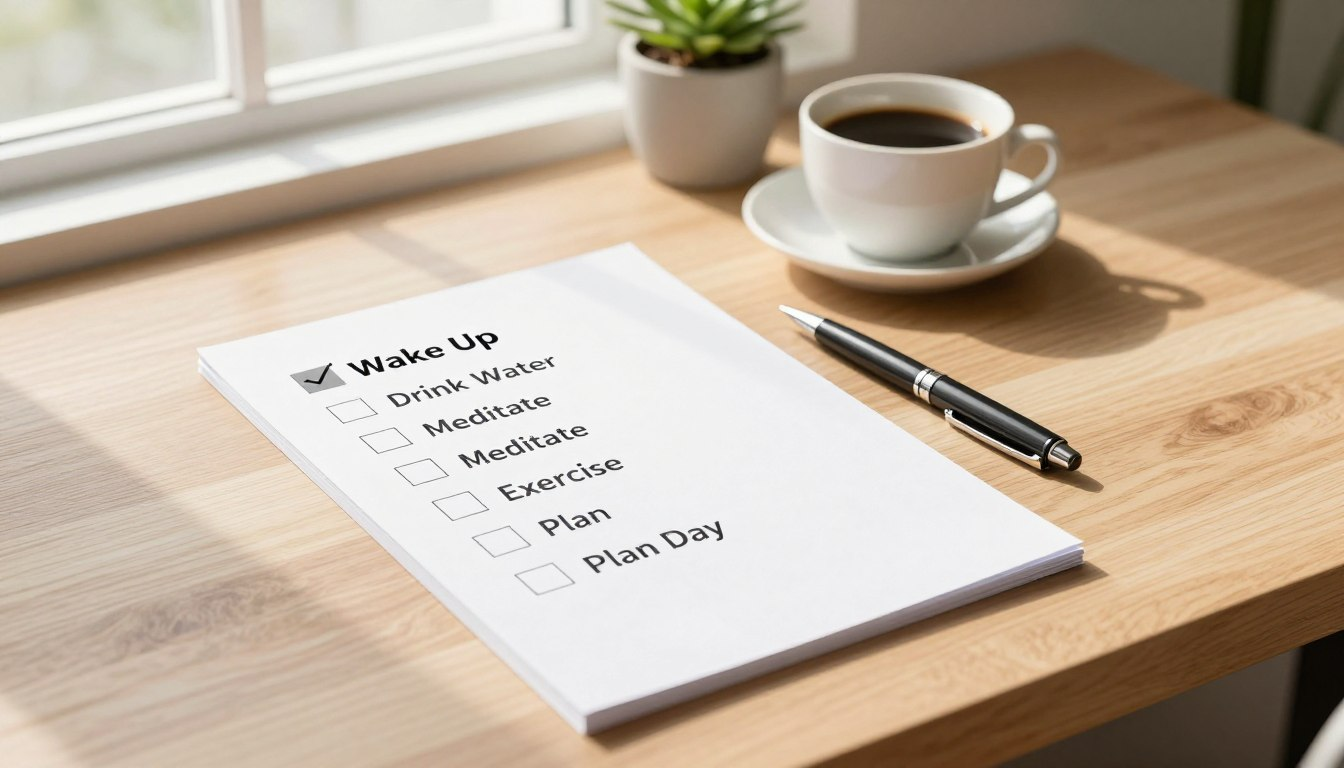
Ever thought about how 15 minutes in the morning could change your life? Starting your day right can lead to success and less stress. Imagine feeling calm and ready before your first email.
Studies show people who follow a adult morning routine guide make about $12,500 more a year. By starting your day right, you set a positive tone for all your meetings. This helps you stay energetic all day.
Controlling your morning helps you stay ahead of the day. Why let your mood be random when you can plan it? A simple plan can make you feel less stressed and more focused on your goals.
You should start your day in a way that makes you feel good and focused. Let’s make your morning hours joyful. We’ll show you how to create a schedule that really works for you.
Why a 15-Minute Morning Routine Changes Everything
A 15-minute morning routine can change your life. It boosts your daily productivity and success. A short but effective routine can make a big difference in your morning habits for success.
Studies show that your morning is 73% shaped by your sleep the night before. This highlights the need for a good start with a productive morning routine.
Knowing how morning routines affect your day is key. A good daily routine for adults can set the day’s tone. It affects your productivity and happiness.
The Science Behind Quick Morning Rituals
Quick morning rituals are good for your mind and body. Spending a short time each morning on a routine can make you feel better. These rituals help your body’s clock and wakefulness.
- Enhances mental clarity and focus
- Boosts energy levels
- Sets a positive tone for the day
How Busy Adults Benefit from Shorter Routines
Busy adults often find it hard to fit in long morning routines. But, a short routine can work well. By focusing on the most important tasks, you can feel accomplished early.
Short morning routines offer many benefits. They include:
- Increased sense of control over the day
- Improved time management
- Enhanced ability to tackle daily challenges
By choosing a concise and effective morning routine, busy adults can achieve success. They can also improve their life quality.
Setting Yourself Up the Night Before

Getting ready for the morning starts the night before. A few simple steps can make your morning better. This helps you follow your healthy morning routine and morning routine schedule for adults.
Prepare Your Environment for Success
First, get your environment ready. This means laying out your clothes or prepping breakfast. Remember, “The way to get started is to quit talking and begin doing.” A little prep helps you stay on track.
“The way to get started is to quit talking and begin doing.”
Evening Tasks That Save Morning Time
Evening tasks can save you time in the morning. Here are a few:
- Meal planning and prep
- Packing your bag
- Setting your coffee maker
- Laying out your clothes
These tasks save you time and reduce morning stress.
| Evening Task | Morning Time Saved |
|---|---|
| Meal Prep | 15 minutes |
| Packing Bag | 10 minutes |
| Laying Out Clothes | 5 minutes |
The Power of a Consistent Sleep Schedule
Keeping a regular sleep schedule is key. Going to bed and waking up at the same time every day is important. It improves your sleep and morning routine.
These tips help make your morning routine better and more fun. The main thing is to prepare and be consistent.
The First 5 Minutes: Wake Up and Hydrate
The first five minutes of your morning are very important. They can make you feel awake and ready to go, or tired. To start your day right, you need a good wake-up routine.
When your alarm goes off, you have to decide fast. You can hit snooze or get up. Snoozing might feel good, but it’s not good for your day.
Skip the Snooze Button Strategy
Hitting snooze messes up your sleep. It breaks your rest into pieces. This makes you feel tired and confused in the morning.
Try to wake up at the same time every day. This helps your body get used to waking up. It makes it easier to get up when your alarm rings.
Start with Water, Not Coffee
Drinking water first thing helps you wake up. It gets your body moving and fresh. Coffee is great, but water is better for starting your day.
Drinking water boosts your energy and health. It’s a simple way to start your day right.
Light Exposure for Natural Energy
Getting natural light in the morning helps you feel better. Open your curtains or go outside for a bit. It makes you feel more awake and happy.
Adding these habits to your morning can make your day better. Remember, the first 5 minutes are key. They help you start your day with purpose and energy.
Minutes 6-10: Movement and Mindfulness

First, get your body hydrated and wake up your mind. Then, add some gentle movement and mindfulness. This part is key for a morning habits for success by giving you energy and a good start.
Moving and being mindful in the morning is great for you. It makes you feel better and helps you stay focused. Even a little bit can make a big difference.
Quick Stretching Exercises That Work
Start with simple stretches to get your muscles ready. Here are some easy ones:
- Neck stretch: Slowly tilt your head to the side, bringing your ear towards your shoulder.
- Shoulder rolls: Roll your shoulders forward and backward in a circular motion.
- Wrist extensions: Hold your arm straight out and gently pull your wrist back with your other hand.
- Leg swings: Stand with your feet hip-width apart and swing one leg forward and backward.
Two-Minute Breathing or Meditation Practice
Mindfulness, like deep breathing or meditation, calms your mind. It gets you ready for the day. You can use an app or just focus on your breath:
- Deep breathing: Inhale deeply through your nose, hold for a few seconds, and exhale slowly through your mouth.
- Body scan: Lie down or sit comfortably, and bring your attention to different parts of your body, starting from your toes and moving up to your head.
Even a short mindfulness practice can change how you feel and do things all day.
Setting Your Daily Intention
Setting a daily goal helps you stay focused and motivated. Think about what you want to do and set a goal. It could be something simple like:
- Completing a specific task at work
- Exercising or taking a walk during your lunch break
- Practicing gratitude by writing down three things you’re thankful for
Adding these to your morning routine helps you face the day with clarity and purpose.
Minutes 11-15: Personal Care and Planning

Now, you’ve hydrated, moved, and practiced mindfulness. It’s time for personal care and planning. This part is key for a productive day.
Think about personal hygiene, getting dressed, and planning your day. Let’s look at how to do these tasks well.
Streamlined Hygiene Routine
A good hygiene routine makes you feel fresh. Focus on the basics: brush your teeth, wash your face, and use the restroom. Prepare everything the night before to save time.
For example, have your toothbrush and toothpaste ready. Also, have a face towel ready. This makes your morning routine quicker and easier.
Getting Dressed Without Decision Fatigue
Decision fatigue can be tiring. Plan your outfit the night before. Pick something comfy and right for your day.
Consider a capsule wardrobe to make choices easier. Here’s a simple table to help plan your outfit:
| Day | Outfit | Occasion |
|---|---|---|
| Monday | Formal attire | Work |
| Tuesday | Casual wear | Errands |
| Wednesday | Business casual | Meeting |
Review Your Top Three Priorities
Lastly, review your top three priorities for the day. This keeps you focused on what’s important. Write them down in a planner or on a sticky note.
By following these steps, you can make a morning routine that helps you succeed. This adult morning routine guide fits your lifestyle. It’s a great addition to your morning routine checklist for adults.
Your Complete Morning Routine Checklist for Adults

Now we know why a morning routine is key. It’s time to make a checklist. This will help you stay on track and enjoy your 15-minute morning.
A good morning routine is more than tasks. It’s a base for a productive day. Mix hydration, movement, mindfulness, and planning to succeed.
The Printable 15-Minute Template
We made a printable 15-minute morning routine template. It breaks the morning into easy parts. This ensures you do all the important things.
- Minutes 1-5: Wake Up and Hydrate
- Minutes 6-10: Movement and Mindfulness
- Minutes 11-15: Personal Care and Planning
You can change this template to fit you. For example, skip exercise for a quick shower or stretching.
How to Track Your Morning Habits
Tracking your morning habits is key. Here are ways to do it:
| Method | Description | Benefits |
|---|---|---|
| Morning Routine Journal | Write down your daily activities and reflections | Helps identify patterns and areas for improvement |
| Mobility Apps | Utilize apps designed for habit tracking | Provides reminders and statistical insights |
| Checklist on Fridge | Place a physical checklist in a visible location | Easy to reference and check off tasks |
Charles Duhigg, author of “The Power of Habit,” says, “By understanding how habits work, you can transform them. This gives you the freedom to make positive changes in your life.”
Adjusting the Checklist for Your Lifestyle
Your morning routine should match your life. Feel free to try new things and change the checklist as needed.
“The key is not to prioritize what’s on your schedule, but to schedule your priorities.”
Stephen Covey
Think about your goals, work, and family when making your morning routine. This way, you’ll have a healthy morning routine that helps you succeed every day.
Customizing Your Productive Morning Routine
Creating a morning routine that fits you can really help. Everyone is different, so it’s important to make yours special.
Variations for Early Birds vs. Night Owls
What time you feel best in the morning matters. Early birds are full of energy in the morning. They can do hard things like exercise or big tasks.
Night owls start slower. They might like to relax or wake up slowly.
- For early birds: Start with a tough task or a big workout.
- For night owls: Start with easy stretches or a short meditation.
Adapting for Parents and Caregivers
Parents and caregivers face special morning challenges. They need to get kids ready for school. Being flexible is important.
Here are some tips for parents and caregivers:
- Get your kids involved in the morning routine. It teaches them responsibility.
- Get ready the night before to save time in the morning.
- Focus on what’s most important for you and your family.
Weekend vs. Weekday Morning Routines
Weekends and weekdays need different morning routines. Weekdays are busy, but weekends are for relaxing and recharging.
Here’s how to adjust your weekend routine:
- Sleep in a bit later for more rest.
- Do things you love, like hobbies.
- Use the time to plan for the week ahead.
Common Morning Routine Mistakes to Avoid
A good morning routine is key to being productive. But, many of us make mistakes that hurt our efforts. Knowing and avoiding these mistakes helps make your mornings better.
Overcomplicating Your Morning Habits
One big mistake is making your morning too complicated. Trying to do too much can feel overwhelming. Keep it simple by focusing on what’s really important for you.
For example, start with a simple 2-minute breathing exercise instead of 30 minutes of meditation. This makes it easier to keep up with your routine. The goal is to make a routine you can keep, not one that’s too hard.
Starting Your Day with Your Phone
Another mistake is starting with your phone. It makes you react to emails and social media instead of planning your day. Start with something like journaling or stretching to set a good tone.
Waiting to use your phone helps you control your morning. It lets you focus on what you need and want. This small change can make a big difference in your day.
Skipping Consistency for Perfection
Many people aim for perfect mornings. But, being perfect is not as important as being consistent. A simple routine is better than a complex one you can’t keep up with.
Build habits you can keep up with. Celebrate small wins and remember it’s okay to have bad days. By focusing on being consistent and flexible, you can create habits that help you succeed.
The Long-Term Benefits of Starting Your Day Right
Starting your day right helps you feel clear-minded and manage time better. It also makes you feel better overall. A good morning routine can change your life for the better.
Improved mental clarity and focus are big pluses of a morning routine. It helps you start with a clear mind and a goal. This makes you more confident and make smarter choices all day.
Improved Mental Clarity and Focus
Mindfulness, like meditation, can calm your mind and make your day better. It helps you focus on what’s important and reach your goals.
Regular mindfulness practice improves your thinking and lowers stress. This makes your day more productive and happy.
Better Time Management Throughout the Day
A good morning routine also teaches you to manage time well. Waking up at the same time and having a plan helps you stay on track. This makes your day more efficient.
Good time management is key to reaching your goals and feeling less stressed. It lets you do more in less time and balance work and life better.
Enhanced Physical and Emotional Well-being
A positive morning can also boost your health and mood. Doing some exercise in the morning gives you more energy and health.
Also, a regular morning routine helps control your feelings and lowers stress. This leads to a happier and more balanced life.
Adding a healthy morning routine to your day can bring these benefits. It helps you start each day feeling great.
Conclusion
You now know how a simple morning routine can change your day. Starting with just 15 minutes can make a big difference. It helps you think clearer, manage time better, and feel better overall.
Creating a morning routine that fits you is easy. Just plan the night before, drink water and move in the morning, and set your day’s goals.
Being consistent and starting small is key. Use the template to make your own morning routine. As you stick to it, you’ll see big changes in your life. So, start today and make your mornings better.
FAQ
Why is having a specific morning routine checklist for adults so important?
A morning routine checklist helps you start your day without thinking. It saves your brain for later tasks. James Clear says in *Atomic Habits* that small habits lead to big success.
Can a 15-minute daily routine for adults really make a difference in my productivity?
Yes, it can. Being consistent for just 15 minutes is more powerful than long hours. Dr. Andrew Huberman says a short routine can reset your body and mind.
What are the best morning habits for success to include if I’m short on time?
Focus on three things: drink water, get some light, and plan your day. A glass of water wakes you up. Writing down your goals helps you stay focused.
How can I use an adult morning routine guide to stop hitting the snooze button?
Use an alarm across the room and a “sunrise” alarm clock. Hydrate and get some light right away. This helps you feel awake and ready to go.
Is there a morning routine template that works for both early birds and night owls?
Yes! A good routine is flexible. Wake up, hydrate, move, and plan. You can adjust it to fit your schedule and stay productive.
What should I include in my morning routine schedule for adults to reduce stress?
Include mindfulness or stretching for five minutes. Use an app for a quick breathing exercise. Prepare your outfit the night before to avoid morning stress.
Why does a healthy morning routine discourage checking your phone immediately?
Checking your phone right away distracts you. It lets others control your day. Stay offline for 15 minutes to focus on yourself.
How do I stay consistent with a productive morning routine on the weekends?
Keep your routine consistent, but adjust it on weekends. Skip planning but keep hydrating and moving. Use a habit tracker to stay on track.