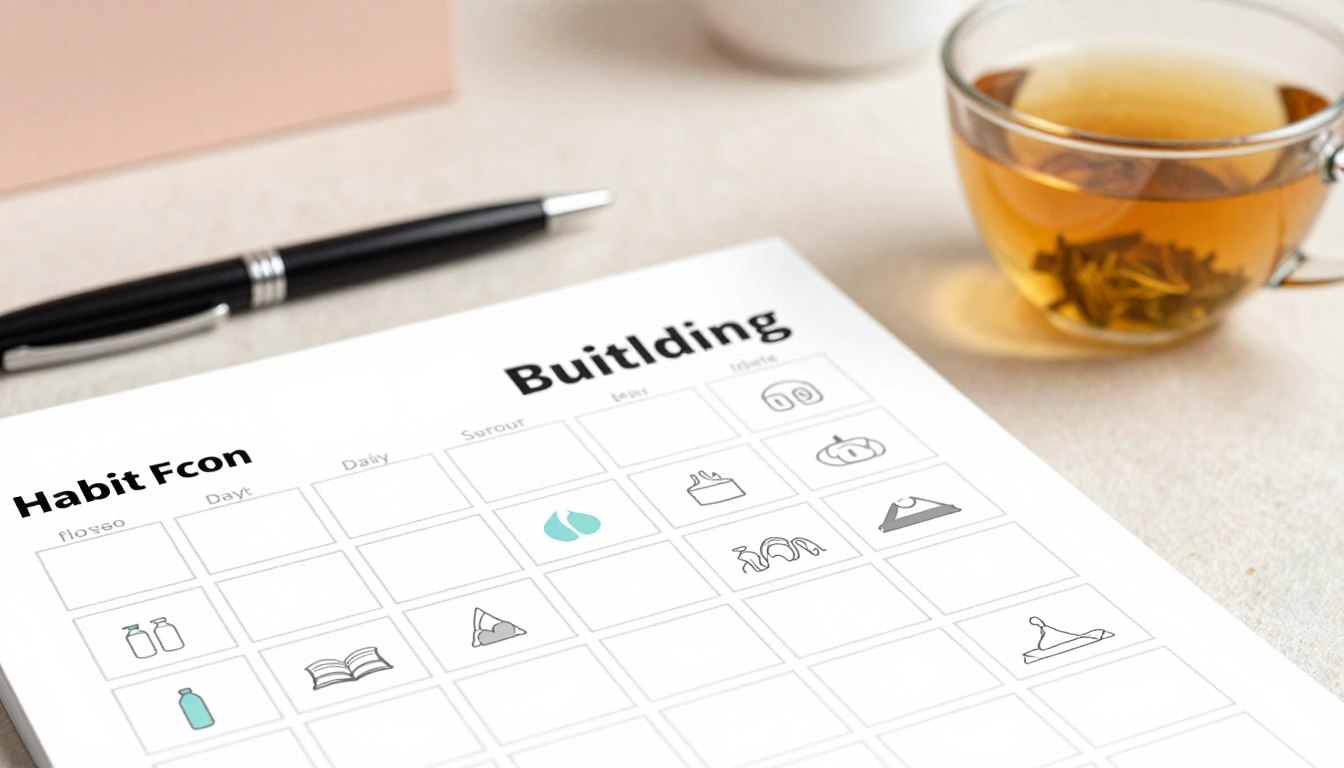
Most people don’t fail at habits because they’re lazy. They fail because life is noisy: a late meeting, a tired evening, a weekend away, and suddenly the “new routine” disappears. A habit tracker printable fixes that problem in a simple way—it turns your habit into something you can see, touch, and finish.
This guide is built for beginners who want real results without an overwhelming system. You’ll focus on one habit for 30 days, track it daily, and learn how to keep going even when motivation dips. You don’t need a fancy planner or a dozen apps. You need a clear target, a tiny daily action, and a tracker you’ll actually use.
By the end, you’ll have a printable tracking layout, a week-by-week roadmap, and the “what to do when you miss a day” plan—so you can build consistency that lasts longer than a burst of New Year energy.
Key Takeaways:
- Pick one habit that fits your real life (not your fantasy schedule).
- Make the habit small enough to do on busy days (this is what creates streaks).
- Use a printable tracker to create visual proof of progress—and keep momentum when motivation drops.
- Follow the never-miss-twice mindset so one slip doesn’t become a full reset.
Why a 30-Day Habit Challenge Works (And What It Really Does)
Let’s be honest: 30 days is not magic. It won’t automatically make every habit effortless forever. What 30 days does give you is a clean, motivating container—long enough to build a rhythm, short enough to feel doable.
Think of 30 days as a “starter sprint”. It helps you:
- Prove to yourself that you can show up consistently.
- Find the friction points (time, energy, forgetting, environment) while the habit is still simple.
- Create a daily cue—so the habit begins to feel like a normal part of your day.
Most importantly, a 30-day tracker makes your progress visible. When you’re building a new behavior, your brain needs quick wins. Seeing a growing chain of checkmarks is a win you can’t argue with.
How to Choose the Right Habit to Track for 30 Days
Your tracker is only as effective as the habit you choose. The best 30-day habit is not the hardest or most impressive—it’s the one you can repeat on your worst Tuesday.
Start Small (So You Actually Finish)
Pick a habit that takes 2–10 minutes at the beginning. Small habits are “streak-friendly.” They survive travel days, sick days, busy seasons, and low-energy evenings.
Examples of beginner-friendly 30-day habits:
- Drink a glass of water after waking up.
- 10-minute walk after lunch.
- Read 5 pages (or 10 minutes) before bed.
- Stretch for 3 minutes after brushing your teeth.
- “One surface reset”: clear and wipe the kitchen counter nightly.
Ask These 5 Questions Before You Commit
- Will this habit improve my life in a way I’ll notice in 30 days?
- Can I do it even on a chaotic day?
- Where will it live in my day (morning, lunch, after work, bedtime)?
- What will make me forget—and what reminder can I build in?
- If I miss a day, will I come back tomorrow without drama?
Common First-Habit Mistakes (So You Can Avoid Them)
- Choosing a “result” instead of an action: “Lose weight” isn’t trackable daily, but “walk 10 minutes” is.
- Picking a habit that depends on perfect conditions: if it requires a full hour, a gym, and zero interruptions, it won’t survive real life.
- Tracking too many habits at once: one habit builds confidence; five habits builds guilt.
What Makes a Habit Tracker Printable More Effective Than Apps (For Many People)

Apps can be great—but they’re also competing with your texts, notifications, and endless scrolling. A printable habit tracker is quiet. It doesn’t buzz. It just sits there, reminding you who you said you wanted to become.
1) It Creates a Daily Visual Cue
When your tracker is on your fridge, desk, or nightstand, it becomes part of the environment. You don’t rely on willpower—you rely on what you see.
2) It Turns Progress Into Something You Can “Collect”
A checkmark feels small, but it’s powerful. It’s proof. When you look back after two weeks and see a mostly-filled grid, you’re more likely to keep going because you don’t want to break what you’ve built.
3) It Removes Digital Distractions
Printing your tracker is a tiny commitment that pays off. You’re choosing a tool that supports focus instead of stealing it.
Essential Elements of an Effective Daily Habit Tracker

Forget fancy designs. A strong tracker is built around behavior—what makes you start, what helps you finish, and what keeps you coming back tomorrow.
The 6 Must-Haves
- The habit (written clearly): “Walk 10 minutes” beats “exercise more.”
- A simple daily checkbox/grid: no complicated scoring at the start.
- Your “why” (one line): a quick reminder for low-motivation days.
- A start date + finish date: it makes the challenge feel real.
- A weekly check-in prompt: so you adjust instead of quitting.
- A “next step” box for Day 31: because habits shouldn’t disappear after the tracker ends.
Simple Design Styles That Actually Get Used
- Minimal grid: best for busy people who just want a fast checkmark.
- Calendar-style boxes: best if you like seeing weekends and patterns.
- “Streak” tracker: best if momentum motivates you (many people love the chain effect).
Your 30-Day Habit Tracker Printable (Copy + Paste)
Use this printable grid for one habit. Write your habit at the top, print it, and mark each day right after you complete the action.
Habit I’m building: ______________________ Start date: ____________ Why it matters: ______________________
| Day 1 ☐ | Day 2 ☐ | Day 3 ☐ | Day 4 ☐ | Day 5 ☐ | Day 6 ☐ |
| Day 7 ☐ | Day 8 ☐ | Day 9 ☐ | Day 10 ☐ | Day 11 ☐ | Day 12 ☐ |
| Day 13 ☐ | Day 14 ☐ | Day 15 ☐ | Day 16 ☐ | Day 17 ☐ | Day 18 ☐ |
| Day 19 ☐ | Day 20 ☐ | Day 21 ☐ | Day 22 ☐ | Day 23 ☐ | Day 24 ☐ |
| Day 25 ☐ | Day 26 ☐ | Day 27 ☐ | Day 28 ☐ | Day 29 ☐ | Day 30 ☐ |
Printing Tips (So It’s Actually “Printable”)
- Print in black-and-white if you want a clean, ink-friendly version.
- If you like reusing it, print on thicker paper and laminate (dry-erase marker works perfectly).
- If your printer cuts the edges, use “Fit to page” in print settings.
Step-by-Step Guide: How to Use Your Habit Tracker Printable

Step 1: Define the Habit in One Sentence
Write it so clearly that a stranger would know what “done” means. Examples:
- “Walk for 10 minutes after lunch.”
- “Floss before bed.”
- “Read 10 minutes at 9:30 pm.”
Step 2: Choose a Trigger (So You Don’t Rely on Memory)
Your habit needs a “hook”—something that already happens daily. Use this simple formula:
After I ____________________ (existing routine), I will ____________________ (new habit).
Example: After I brush my teeth, I will floss one tooth (yes, even one—to start).
Step 3: Place the Tracker Where You’ll See It Without Trying
Good placement beats motivation. Put it where the habit happens:
- Water habit → on the fridge or by your kettle/coffee station.
- Stretch habit → on your bathroom mirror.
- Reading habit → inside the book cover or on your nightstand.
Step 4: Mark It Immediately (This Is the Reward)
Don’t “save it for later.” The checkmark is part of the habit. Completing the action and marking the tracker back-to-back helps your brain connect effort → reward.
Step 5: Do a Weekly 3-Minute Review
Once a week, answer these questions (write them in the notes area or on the back of your tracker):
- What made the habit easy this week?
- What made it hard?
- What’s one tiny change that would make next week smoother?
- Do I need to shrink the habit on busy days?
How to Stay Consistent Week by Week (The Real 30-Day Plan)
Motivation is unreliable. A good 30-day plan assumes you’ll have great days and messy days—and still helps you finish.
Days 1–7: Make It Embarrassingly Easy
Your goal this week is not performance. It’s showing up. If the habit feels too big, shrink it until you can do it daily. This is how you build trust with yourself.
Busy-day version examples:
- Exercise habit → “Put on trainers and walk for 2 minutes.”
- Reading habit → “Read one page.”
- Declutter habit → “Throw away 3 items.”
Days 8–21: Expect the Motivation Dip (And Plan for It)
This is where most people quit—because the habit stops feeling “new.” Your job is to keep the habit attached to a routine and remove friction:
- Prep your environment (water bottle filled, book on pillow, yoga mat visible).
- Decide the time/place in advance (same time, same location, same trigger).
- Keep the habit short enough that you can’t talk yourself out of it.
Days 22–30: Lock It In With a “Day 31” Plan
Don’t let Day 30 become an ending. Use the final week to choose what happens next:
- Keep the habit the same for another month.
- Increase slightly (10 minutes → 15 minutes) while keeping the same trigger.
- Add one supporting habit only if your first habit feels stable.
What to Do When You Miss a Day (Without Quitting)
Missing one day doesn’t ruin your habit. The danger is the story you tell yourself after: “I messed up, so what’s the point?” That story is what ends streaks—not the missed day.
Use the Never-Miss-Twice Rule
If you miss a day, your only job is to come back the next day. No punishments. No doubling the habit. Just return to the routine.
Do a Quick “Why Did I Miss?” Check
Pick one reason (not five). Then fix the system, not your personality:
- I forgot → move the tracker to a more visible place and tie the habit to an existing routine.
- I was too tired → create a smaller “minimum version” for low-energy days.
- I ran out of time → schedule the habit earlier or shorten it.
- I felt unmotivated → pair the habit with something enjoyable (music, podcast, nice tea).
Setting Up Your Habit Tracker Planner for Maximum Results

If you prefer a planner-style setup, use the same 30-day logic, just with more structure. The key is still the same: one habit, one clear trigger, one checkmark.
Make Your Habit “Obvious” in Your Space
The easiest habits are the ones you don’t have to remember. Put the tool where you’ll trip over it (in a good way). If your habit is “journal 3 minutes,” keep the pen on the journal. If it’s “walk after lunch,” leave your shoes where you’ll see them.
Link the Habit to an Existing Routine
New habits stick faster when they’re attached to something you already do daily—coffee, brushing teeth, shutting your laptop, feeding the pet. The routine becomes the reminder.
Add Gentle Accountability
Accountability doesn’t have to be intense. Try one of these:
- Tell one friend, “I’m doing a 30-day challenge—ask me how it’s going on Fridays.”
- Put a sticky note on your tracker with a simple promise: “Just show up.”
- Join a small community where people share daily check-ins (even a private group chat works).
Beyond Paper: When a Digital Habit Tracker Makes Sense
Printables are excellent for focus and visibility. Digital trackers can be helpful when you need reminders or you’re tracking something that happens away from home.
Consider digital tracking if:
- You travel often and don’t want to carry paper.
- You truly benefit from notifications (not everyone does).
- Your habit is tied to your phone/computer (like screen-time limits or digital decluttering).
You can also combine both: use the printable as your main “visual streak,” and use a digital reminder as your backup prompt.
After 30 Days: How to Keep the Habit (And When to Add a Second One)
On Day 30, don’t just celebrate—decide. The simplest way to keep your new habit is to continue tracking it for another month with the same trigger.
You’re Ready to Add a Second Habit When…
- You can complete Habit #1 on busy days without negotiating with yourself.
- Missing a day is rare—and you recover quickly when it happens.
- You feel like the habit is “part of the day,” not a daily battle.
If you’re not there yet, that’s fine. Repeat the same habit for another 30 days. Repetition is not failure—it’s how habits become normal.
Conclusion
A habit tracker printable is one of the simplest tools that actually changes behavior—because it makes progress visible, keeps you honest, and helps you return quickly after a missed day.
Choose one small habit, commit for 30 days, and use the tracker as your daily cue and reward. The goal isn’t perfection. The goal is showing up often enough that your new habit becomes part of your identity: “I’m someone who follows through.”
Print your tracker, write your habit at the top, and start today. Day 1 is always available.
FAQ
Why should I choose a habit tracker printable over a smartphone app?
A printable tracker stays visible and distraction-free. It becomes part of your environment, and the daily checkmark gives you a simple “reward” that helps build consistency.
Is 30 days really enough to build a permanent habit?
Thirty days is a strong start. It’s long enough to build momentum and a routine, but some habits take longer to feel automatic. The win is consistency—once you have that, extending to another month is easy.
What’s the best beginner habit to track?
Pick something small, clear, and repeatable. Water after waking up, 10 minutes of reading, a short walk, or a 3-minute stretch are all great first habits.
Where should I keep my printable habit tracker log?
Put it where you’ll see it naturally: fridge, desk, bathroom mirror, nightstand—ideally near the place your habit happens.
What should I do if I miss a day?
Use the never-miss-twice rule. Don’t punish yourself, don’t double the habit—just return tomorrow and make the habit easier if needed.
Can I use a digital tracker and a printable version at the same time?
Yes. Many people use the printable for visible progress and a digital reminder as a backup prompt—especially if they travel or work away from home.
When should I add a second habit?
Add a second habit when your first one feels stable—meaning you can do it even on busy days and you recover quickly after a missed day. If it still feels fragile, repeat the same habit for another 30 days.
Sources checked for accuracy (not part of the post): James Clear on habit formation timelines , Bullet Journal guidance on habit tracking , and a mainstream overview of habit stacking and tracking progress with checkmarks